Below is my artist statement for the Sonder exhibition at Acme Studios, on show until the end of October. (See previous post for details.)
For full image descriptions, jump to the end of this post.
My work in this exhibition consists of a series of gouache paintings inspired by photographs I found in an old photo album that belonged to my grandfather, Itche Achtman, who emigrated from Chelm, Poland to Montreal, Canada in 1927. I didn’t really know him, as he died when I was just four years old, but it seems like I must have inherited his artistic genes– he was known to love literature and act in community theatre – and I always imagine that had he lived he would have been the relative most able to appreciate my own path in life.
The album, with a hand painted landscape decorating its teal blue leather cover, contained over a hundred sepia-coloured portraits, most of them taken in a studio setting. These portraits are almost entirely of young people, including a few portraits that I recognise of my grandfather as a young man. The men are dressed in elegant tuxedo-style suits and ties and the women wear stylish dresses, brocade hats, brooches and feathers.
You will see that my paintings only approximately resemble the originals. I am a self-taught painter and only started painting during COVID, when my usual practice as a writer/filmmaker seemed to lose its meaning, as lots of things did during that time. I tried using a tracing app but failed to master even that! But spending time with these portraits, studying them and transposing them however imperfectly, I felt as though I were paying tribute. At some point, usually when I had painted in the eyes, the subject would come to life – a composite of the original sitter’s photographic imprint and a brand new person.
As I was working on each photo, I was conscious that I might be the last person on earth to consider each of these particular souls. I kept thinking of Itche arriving in Montreal with this photo album, of it being his link to an earlier life and community, and wondering whether he would have pored over it, or stored it away at the back of a cupboard, too painful to revisit.
Chelm is a city in Poland where Jews lived at least as early as the twelfth century. It’s famous in Yiddish folklore and literature, the setting for tales of people who have their own take on the world and humourous ways of doing things. To this day when I tell people my ancestors were from Chelm, many don’t believe it’s a real place.
Before World War II, Chelm was 60 percent Jewish. Jewish life there was greatly affected by the shifting politics of Poland itself, and Chelm was ruled at different times by Austria, Germany, independent Poland and Russia. Stories abound about the oppression of whatever regime was in power – pogroms, discrimination, conscription, forced labour and unemployment – which accounts for my grandfather’s emigration and that of many others before the Second World War. But the vitality of these portraits attests to a cultured, modern society, a world of poetry, political organising and religious debate that I know existed in Chelm, and the multilingual inscriptions on the back of the photos indicate a marked degree of integration amongst its diverse population.
Almost all of the 18,000 Jews living in Chelm at the start of WWII perished at the hands of the Nazis. This tragic history, the ethnic cleansing of Eastern Europe and wiping out of a centuries-old culture and way of life, has repercussions into our own time. At present, the Holocaust is being used as justification for a new genocide, this time in Palestine. Perhaps it’s not even a question of justification, just a deadly reflex brought on by Jewish collective trauma. For me, this is a sickening and depressing legacy. The memorialisation of the people in these portraits should serve a warning and a prohibition against dehumanisation of the “other.” Every person contains a world within them, every life is beautiful and valuable. We deny this recognition of sonder at the expense and peril of our tortured world.
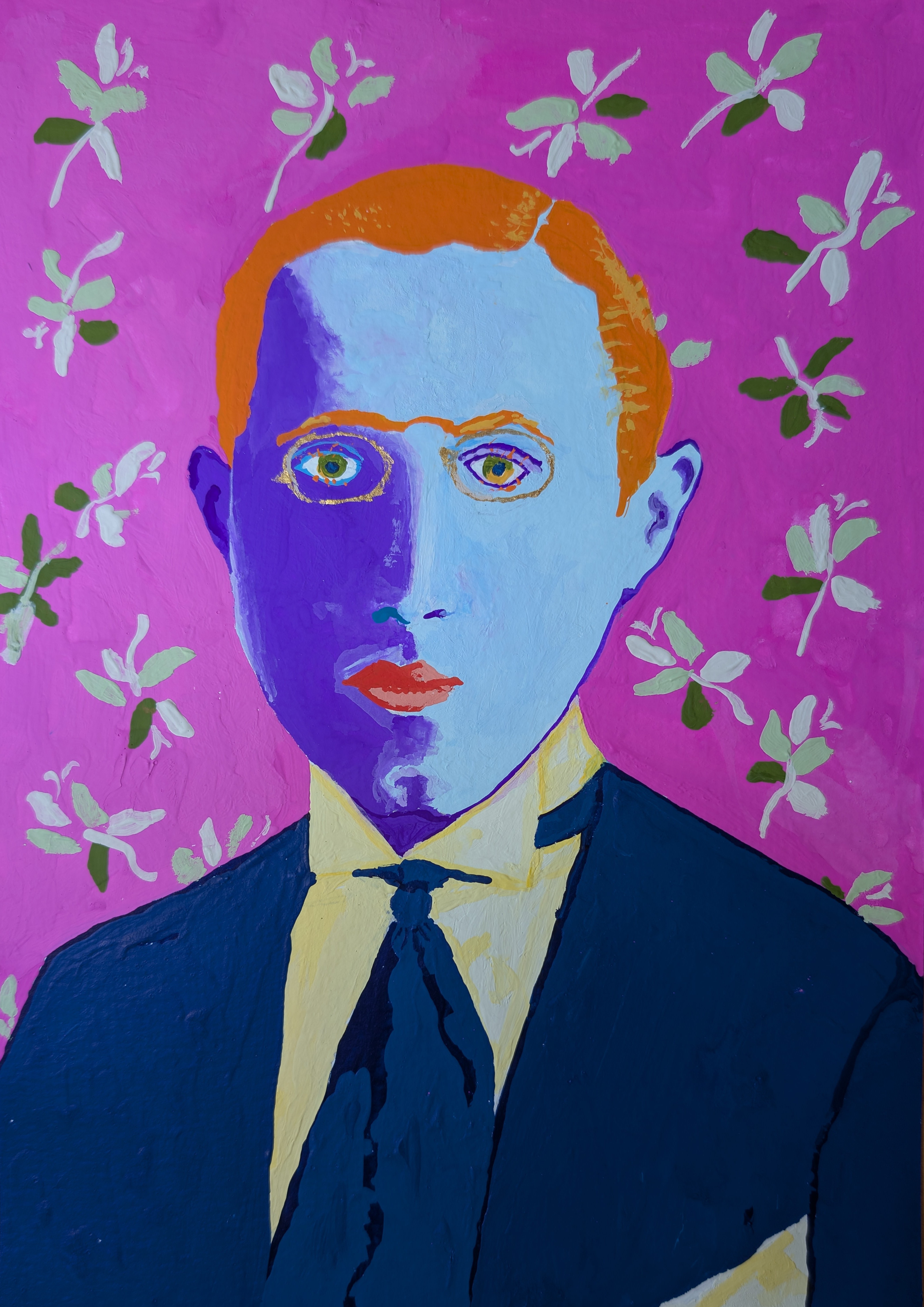
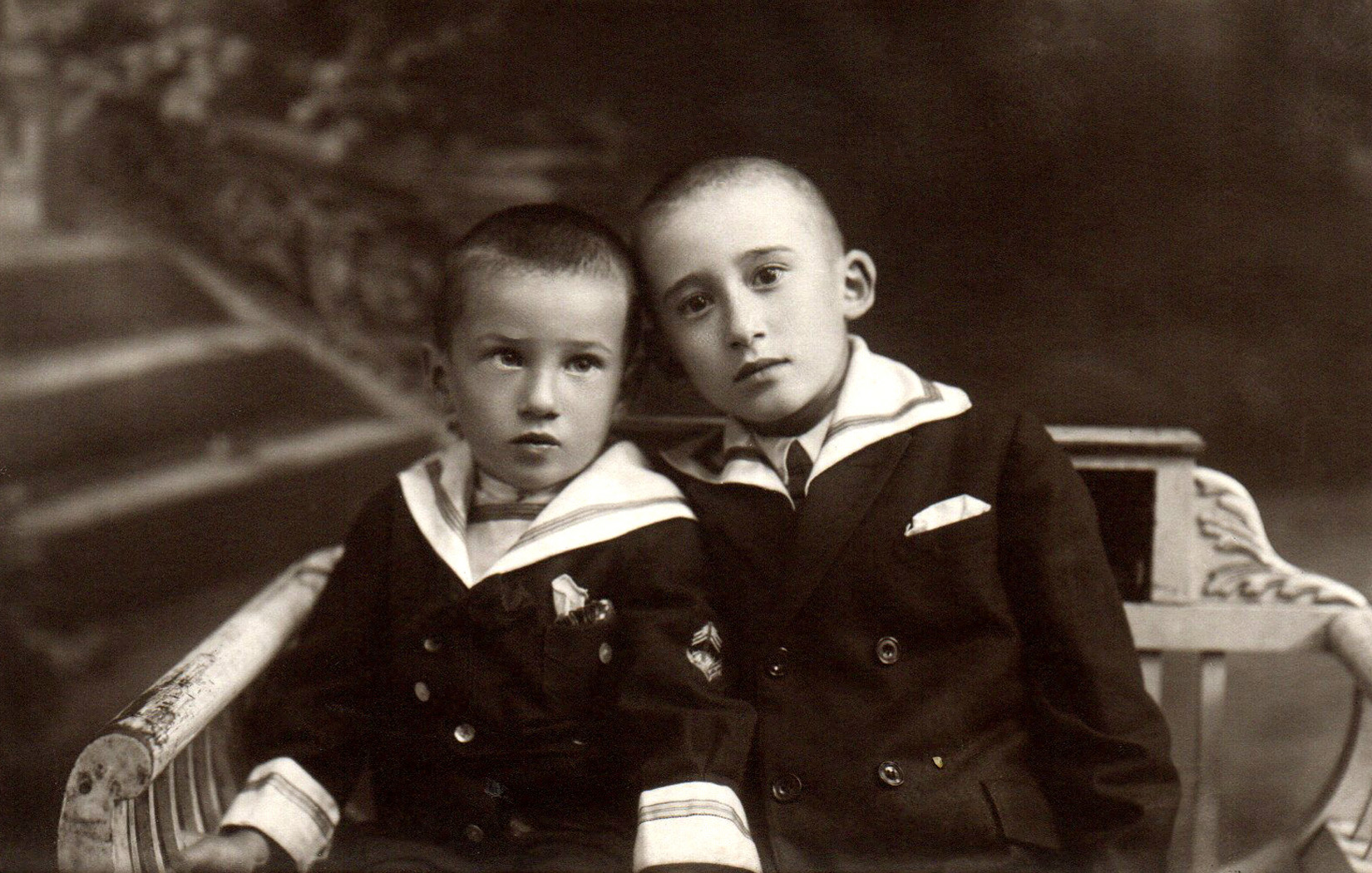
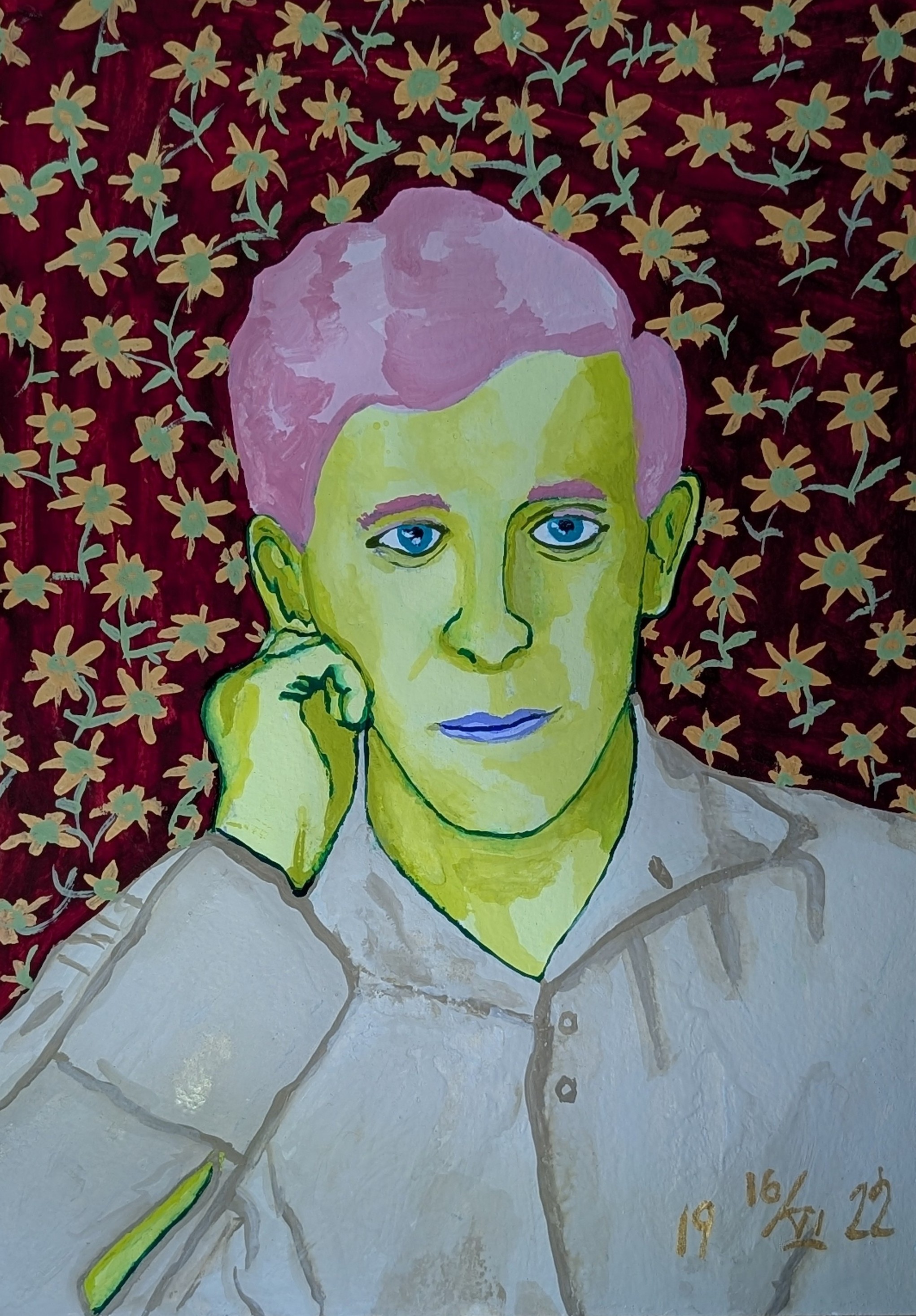
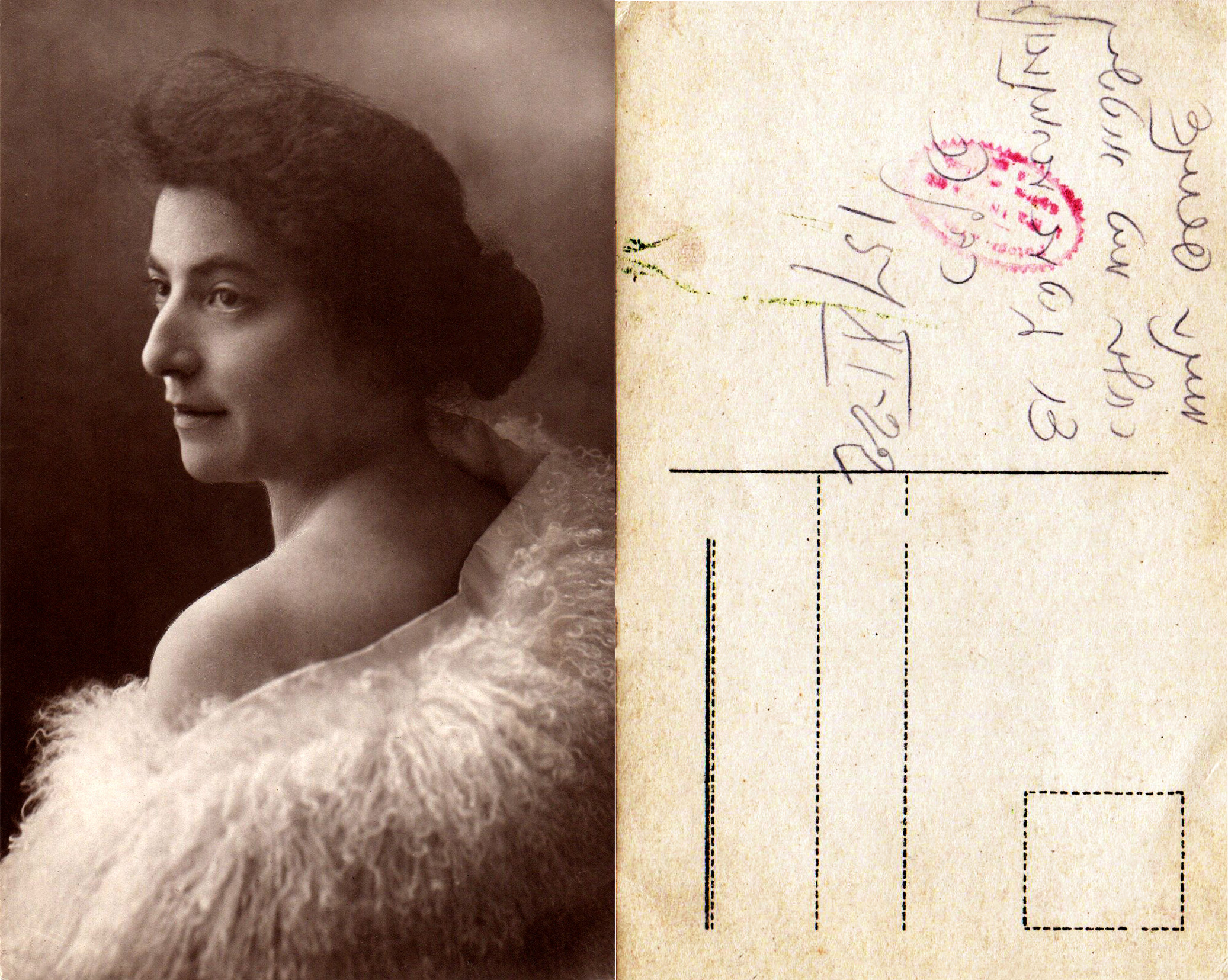
IMAGE DESCRIPTIONS
(Top grouping from left to right)
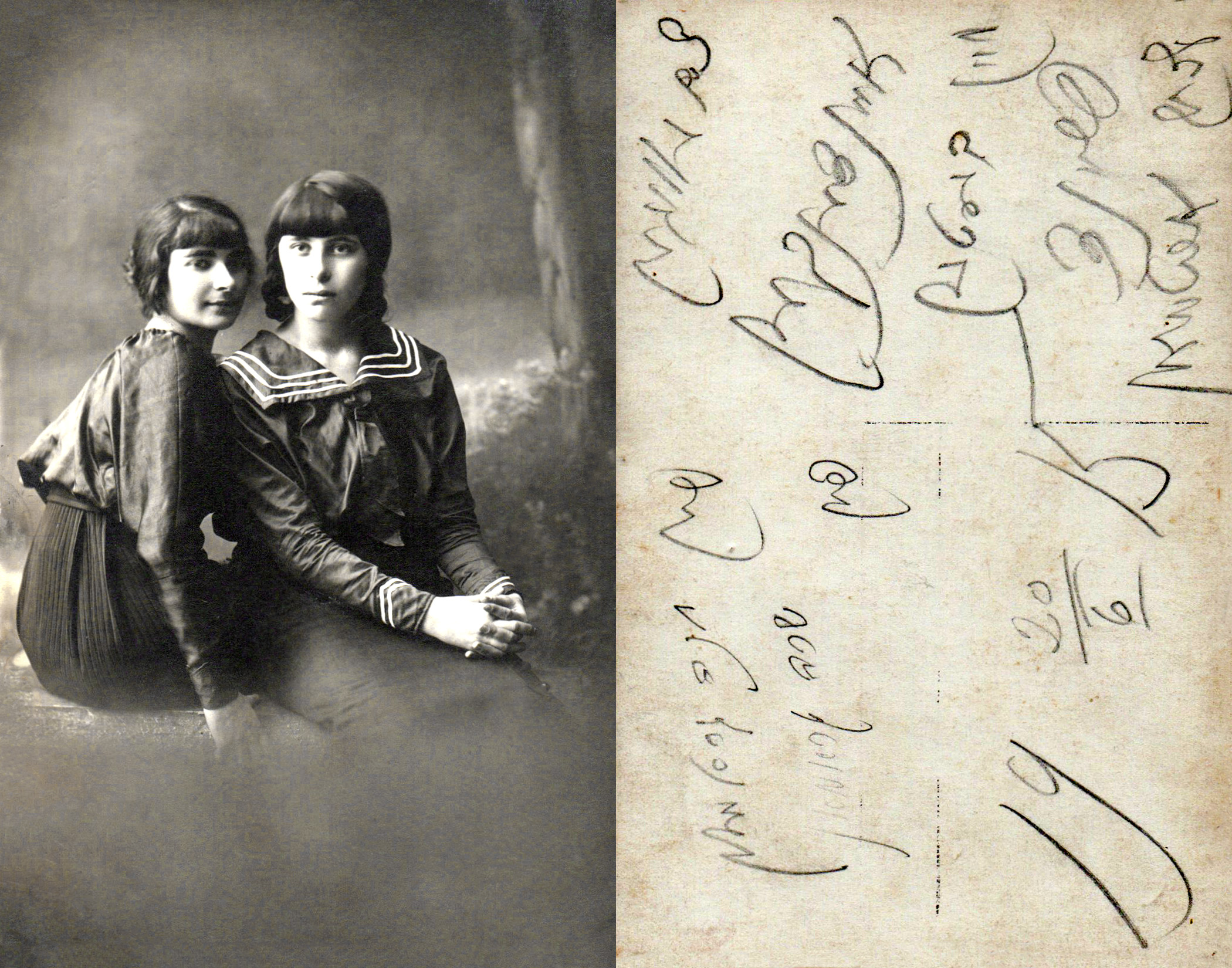
1. This photograph in sepia tones shows two light-skinned young women, my grandfather’s nieces, side by side, their heads nearly touching. They appear to be in their early twenties. The woman on the left has full dark hair in large curls that frame her cheeks. She wears a dark open necked top. Gazing into the distance but not quite at the viewer, she smiles slightly, appearing pensive. The woman on the right wears her hair pulled back from her forehead and framing her head in rolls. Staring at us, she has a sombre expression. She wears an open necked top with a collar, and a star shaped brooch in the v of the collar at chest level. They pose in front of a photo studio backdrop meant to evoke trees in the woods.
The photo is juxtaposed with its reverse side, placed directly below it. The words Carte Postale are printed at the top, then a line separates the card leaving a blank space for the address on the right, with a handwritten Yiddish inscription in pen on the right. The inscription translates roughly as: We are sending you, dear uncle, our photographs. Rebecca Achtman, Tavi Tzimmerman.
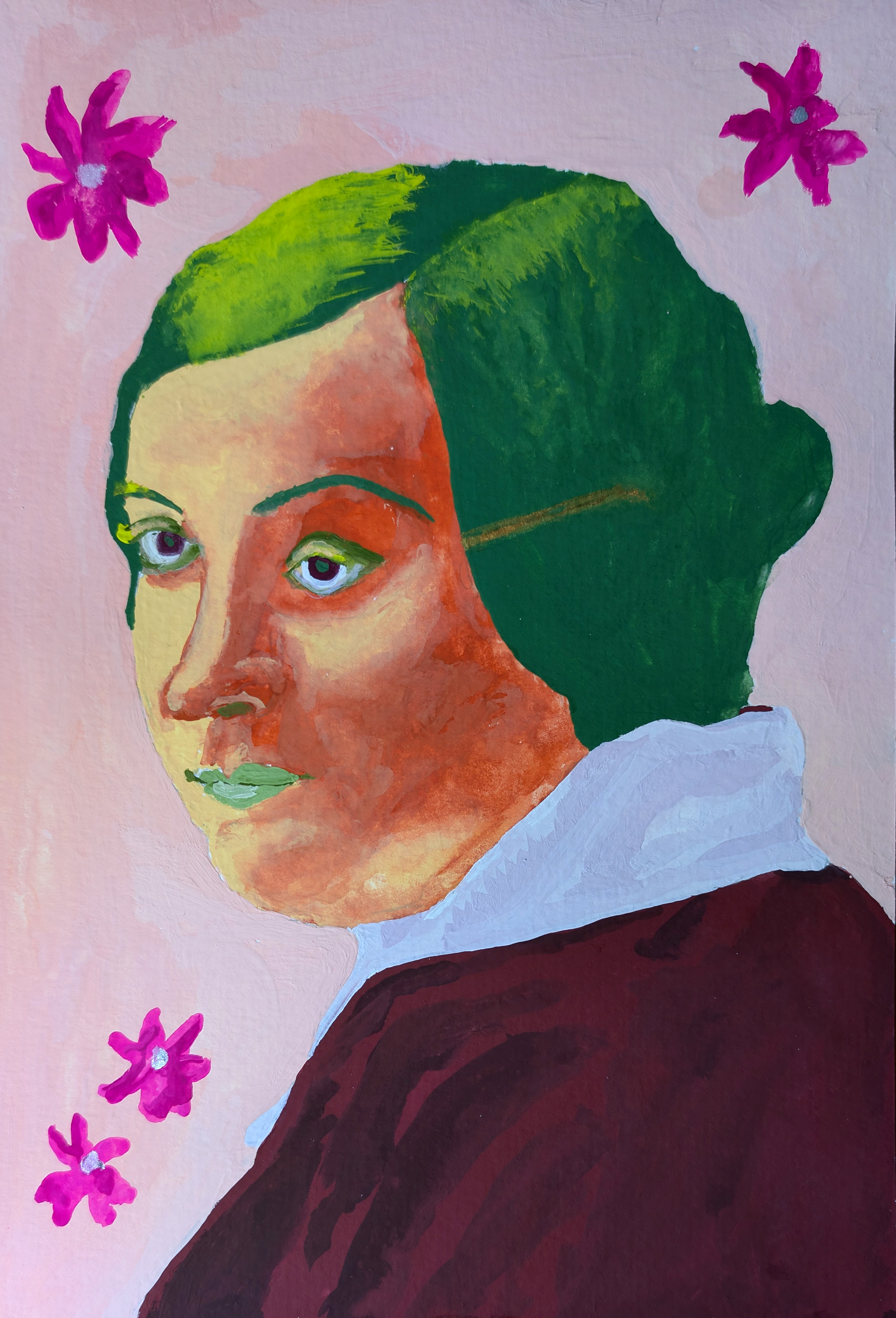
2. This portrait shows a young woman seen in three quarters profile so that she’s looking towards us over her left shoulder, with a pensive or melancholy expression. Her face with full cheeks is painted in skin tones of pale yellow, orange and red and her nose curves inwards and comes to a point, a bit like a ski jump. Her mouth is painted pale green as are her eyelids, while her irises are purple. Her forest green hair is parted on the side and tied back in a bun and she has a gold hair pin clipping it on one side at eye level. She wears a maroon coloured top over a high collared pale purple blouse, and rests on a peachy pink coloured background that is dotted with a few large magenta coloured daisies.
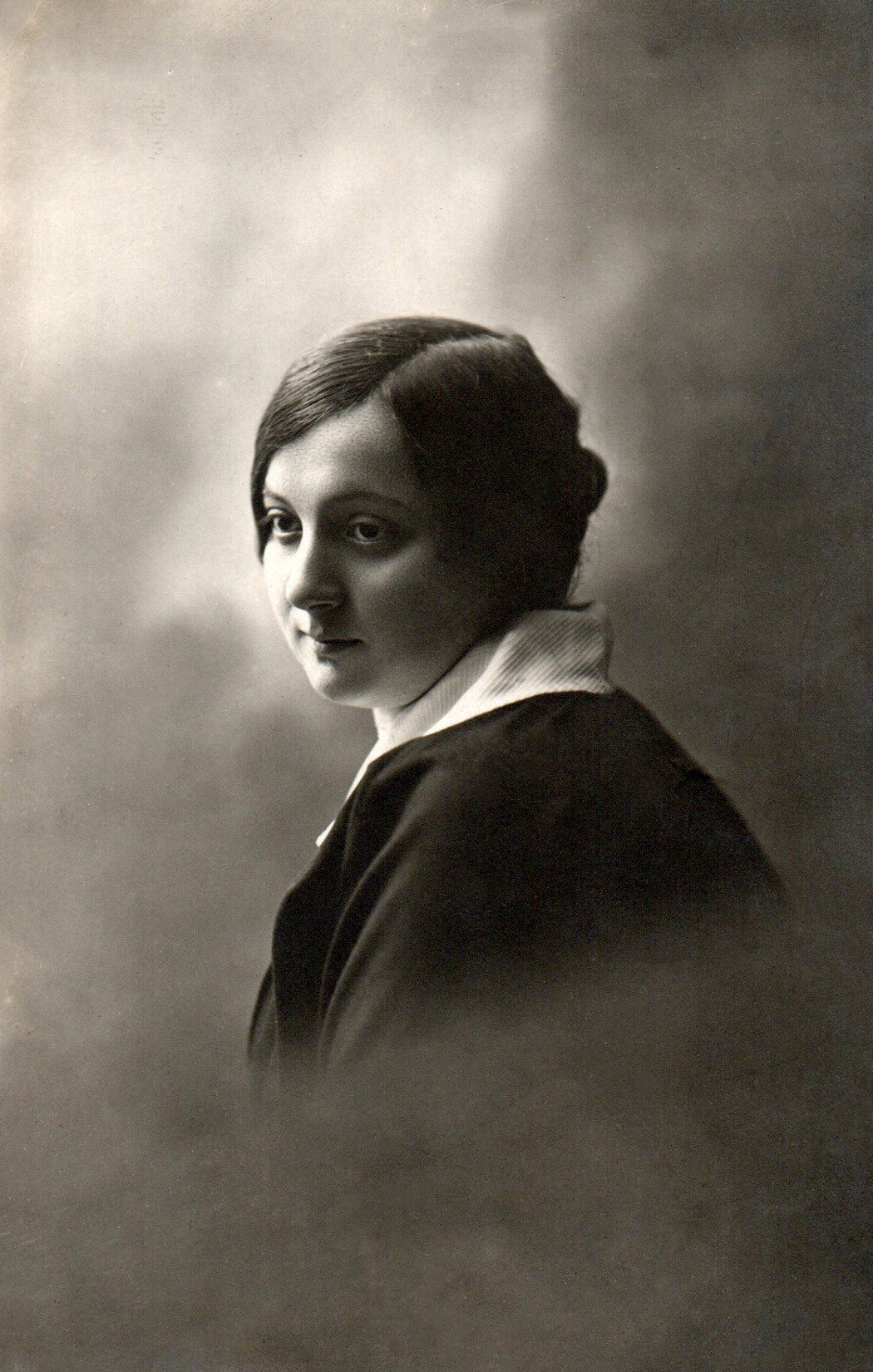
3. A sepia coloured portrait of a light skinned young woman seen from the shoulders up, her body faces backwards with her head turned towards us in three quarter profile. Her dark hair is parted at the side, and tied up in a bun at the back of her head, and a hairpin holding it back at eye level. She wears a dark jacket with a textured high white collar. She has a serene expression on her face, and just the trace of a smile like the Mona Lisa. She is posed against a photographers’ cloud like backdrop.
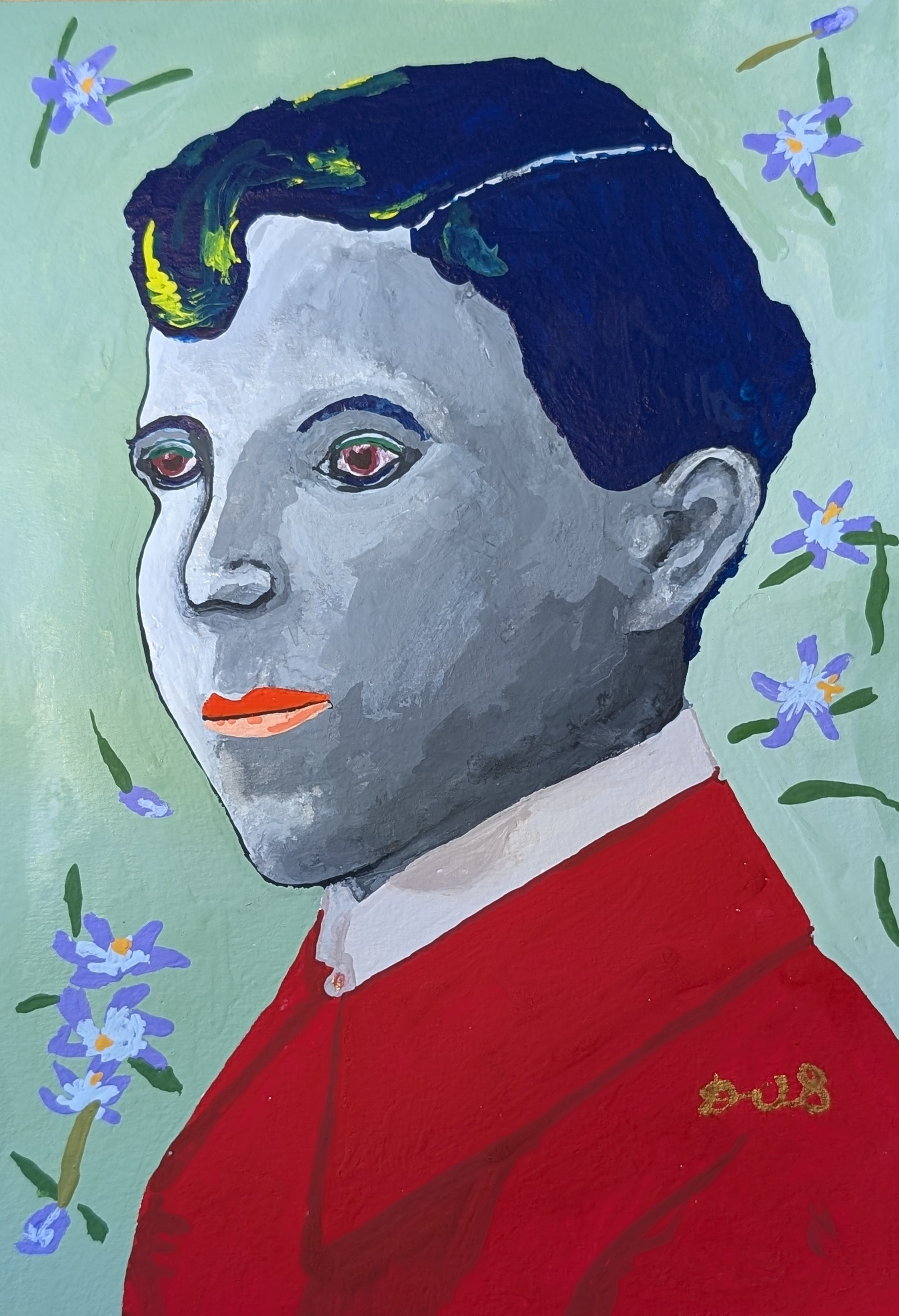
4. This portrait shows a young man in his late teens or early twenties, in three quarter profile. His full clean shaven face is painted in tones of grey and he has a small curved nose. His irises are brownish red, his pursed lips are painted red and pink, and his short hair, parted on the side with a curl over his forehead, is painted dark Prussian blue with yellow and green highlights. Looking to the left with a somewhat downcast expression, he wears a wide lapelled coat depicted in dark red, with a beige collar showing just above it. He rests on a background of pale green with decorations of purple petaled flowers and spiky dark green leaves. Just visible on his shoulder are three Cyrillic letters painted in gold taken from the reverse inscription on the portrait.
(Lower grouping, from left to right, followed by bottom image:)
5. I call this portrait the poet, a young man in his twenties seen face forward from the chest up, looking directly out at the viewer. His face is divided in half, with the light portion on the right painted in pale turquoise and the shadowed portion on the left painted in dark purple. He has a cleft chin whose indentation is painted in purple. He wears his bright orange, slicked down hair parted on the side, with a single orange eyebrow stretching across his brow, and red and pink full lips. He wears a thin gold oval shaped pince nez, that is wiry spectacles that rest on his nose without side supports. He wears a dark blue jacket, a pale yellow wing collared shirt, and a full blue cravat or neck tie with a pale yellow handkerchief visible in his chest pocket. He rests against a bright pink background decorated with daisy like blossoms that are coloured pale and dark green and grey.
6. The basis for the portrait of two young boys, this sepia toned photo shows two boys sitting on a weather beaten but ornate chair, seen from the waist up. Both are light skinned with buzzed haircuts, and they both wear sailors suits, dark double breasted jackets over white shirts that have a wide bib-like collar edged in stripes. They rest the top of their heads against each other, creating a sense of brotherly intimacy. The boy on the left could be four or five and he looks off to the right, while the older boy on the left, about eight or nine, stares directly at us with a serious expression.
7. This young man in his early twenties gazes out towards the viewer but slightly off centre, with a pensive, disturbed expression. Shown from the chest up, he raises his right arm toward his cheek so that his head leans against his curled up hand. His face and hand are painted in tones of lime green with a dark green outline. His irises are turquoise, his lips are painted lilac or pale purple, and his bushy hair, parted on the right side, is candy floss pink. He wears a pale brown button-up shirt with an open collar, and we catch a glimpse of his lime green arm peeking out just below the cuff of one sleeve on his raised arm. He rests against a background of deep red decorated with a busy collection of daisy like flowers, with pale orange petals and pale green centres. In the bottom right corner of the composition, written in gold, is the date from the reverse side of photo, 16/VI/1922.
8. The basis for the portrait called The Actress, this monochromatic photo in tones of sepia shows an elegant, light-skinned woman wearing a feathery shawl or collar. Seen from the shoulders up, she is posed with her back turned to us, her head turned so we see her face in three quarter profile. Her dark hair is swept back over her forehead and gathered in a bun at back of her head. The glamorous white feather shawl or collar is draped low on her back, revealing one bare shoulder. She has dark eyes, an aquiline nose, and her lips are parted, all of which give her face an open gentle expression.
Juxtaposed to the portrait is its reverse side, in the form of a postcard with blank lines for an address and a printed square for the stamp. The left side is inscribed in handwritten Yiddish and there’s also an illegible, oval shaped photographer’s stamp in red ink. The handwriting can be translated as: To my dear friend Itche Achtman, with greetings from your loyal friend Sheindl. 15/11/22
 MICHAEL ACHTMAN